The Nigerian president has ordered
20 former military chiefs and officers to be investigated over alleged
arms procurement fraud.
Among them are the chiefs of defence and air staff under the last administration.
President
Muhammadu Buhari's office said it was "on the recommendation of" a
committee set up to examine procurement from 2007 to 2015.
The activities of 20 companies will also be investigated.
One of the names on the list is of a former security adviser to the government. Sambo Dasuki was charged in December over an alleged $68m fraud. He was accused of awarding phantom contracts to buy helicopters, fighter jets and ammunition.
He denied the allegations and said they were politically motivated.
A previous investigation found that phantom contracts worth $2bn had been awarded.
During
the fight against Islamist militant group Boko Haram, many soldiers
reported that they did not have enough equipment to take on the
insurgents.
Others
on the list include Alex Sabundu Badeh, a former chief of defence
staff, and the former chief of air staff Adesola Nunayon Amosu. Both
served under former President Goodluck Jonathan.
President Buhari was largely elected on a promise to tackle corruption.
The Economic and Financial Crimes Commission (EFCC) is spearheading the anti-corruption campaign.
Benjamin Netanyahu needs to relax his rhetoric on Iran - I personally feel its time Benjamin give peace talk a chance, rather than the continued scaremongering interviews he sends to the People of Israel, the World is watching - Ola Abdull
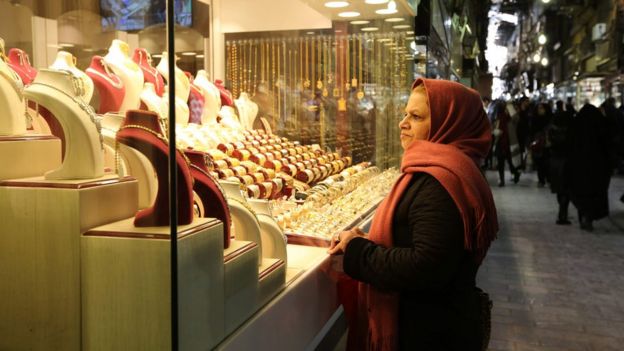
Iran "has opened a new chapter" in
its ties with the world, President Hassan Rouhani has said, hours after
economic sanctions on Tehran were lifted.
On Saturday the
international nuclear watchdog, the IAEA, confirmed Iran had complied
with a deal designed to prevent it developing nuclear weapons.
Mr Rouhani, quoted by Press TV, said the deal did not harm any nation.
Most Western governments hailed the move, but Israel's PM insists Tehran still wants to build a nuclear bomb.
"Without
an appropriate reaction to every violation, Iran will realise it can
continue to develop nuclear weapons, destabilise the region and spread
terror," Benjamin Netanyahu said.
In a statement to the nation on
Sunday morning, Mr Rouhani said: "We Iranians have reached out to the
world in a sign of friendliness, and leaving behind the enmities,
suspicions and plots, have opened a new chapter in the relations of Iran
with the world."
The lifting of sanctions was "a turning point"
for Iran's economy, he said, adding that the country needed to be less
reliant on oil revenues.
The EU foreign policy chief, Federica
Mogherini, said Iran's compliance and the lifting of sanctions would
contribute to improved regional and international peace and security. Iran nuclear deal: Key details Iran nuclear crisis: Six key points Will Iran now get a McDonald's?
Yukiya Amano, the head of the IAEA, will visit Tehran on Sunday for
talks on how to continue monitoring Iran's nuclear programme.
"A lot of work has gone into getting us here, and implementation of this agreement will require a similar effort," he said.
As
part of the deal, Iran had to drastically reduce its number of
centrifuges and dismantle a heavy-water reactor near the town of Arak,
both of which could be used in creating nuclear weapons. The reactor was
then filled with concrete.
Planes and oil trade coming?
Estimates say close to $100bn (£70bn) of Iranian assets will be unlocked under the deal.
Hours
before the sanctions were lifted, Iran's transport minister was quoted
by the official Irna news agency on Saturday as saying a deal had been
struck with the Airbus consortium in Europe to buy 114 new passenger
planes.
And in November, Iran said it expected to immediately
double its daily export of 1.1m barrels of crude oil as soon as the
sanctions were lifted.
Iran has always maintained its nuclear
programme is peaceful, but opponents of the deal - such as some US
Republicans - say it does not do enough to ensure the country cannot
develop a nuclear bomb.
On Saturday, the IAEA, said its inspectors had verified that Tehran had taken the required steps.
As a result, the US Secretary of State John Kerry ordered that US nuclear-related economic sanctions against Iran be lifted.
Speaking
in Vienna where he had been holding talks with his Iranian counterpart,
Mr Kerry said Iran had "undertaken significant steps" which many people
"doubted would ever come to pass". The IAEA said
it had installed a device at the Natanz plant to monitor Iran's uranium
enrichment activities in real time, in order to verify that uranium
enrichment levels were kept at up to 3.67% as agreed in the deal with
world powers.
The response
"I thank God for this blessing and bow to the greatness of the patient nation of Iran" - Iranian President Hassan Rouhani on Twitter
"Today,
as a result of the actions taken since last July, the United States,
our friends and allies in the Middle East, in the entire world are safer
because the threat of a nuclear weapon has been reduced" - US Secretary of State John Kerry
"Even
after signing the nuclear deal, Iran has not relinquished its ambition
to obtain nuclear weapons, and continues to act to destabilise the
Middle East and spread terror throughout the world while violating its
international commitments" - Israeli Prime Minister Benjamin Netanyahu
"Today, the Obama administration will begin lifting economic sanctions on the world's leading state sponsor of terrorism" - US Republican House Speaker Paul Ryan in a statement
"Years of patient and persistent diplomacy, and difficult technical work, have borne fruit as we now implement the deal" - British Foreign Secretary Philip Hammond
Earlier
on Saturday it emerged that Iran had released Washington Post reporter
Jason Rezaian and three other Iranian-American prisoners in an apparent prisoner swap with the United States.
Rezaian, 39, was jailed on charges, including espionage, last November.
The US said it was offering clemency to seven Iranians being held in the US for sanctions violation.
Mr
Kerry said said he was "very happy to say that as we speak five
Americans have been released from custody and they should be on their
way home to their families shortly".
A fifth American, Matthew Trevithick, was also released on Saturday.
President Barack Obama would give more details of the releases later, Mr Kerry said.
What is the nuclear deal?
In
July 2015, Iran agreed a landmark nuclear deal with six world powers to
limit its sensitive nuclear activities for more than a decade in return
for the lifting of crippling sanctions. The US is confident the
agreement will prevent Iran from obtaining a nuclear weapon. Iran says
it has the right to nuclear energy - and stresses that its nuclear
programme is for peaceful purposes only.
What does Iran stand to gain?
The
sanctions have cost Iran more than more than $160bn (£102bn) in oil
revenue since 2012 alone. Once they are lifted, the country will be able
to resume selling oil on international markets and using the global
financial system for trade. Iran has the fourth largest oil reserves in
the world and the energy industry is braced for lower prices. Iran will
also be able to access more than $100bn in assets frozen overseas. What lifting Iran sanctions means for world markets
Oscars 2016: ‘The Revenant’ Leads With 12 Nominations -- See the Complete List
The nominations are in for the 88th Academy Awards and, per usual, there were some snubs and surprises.
The Revenant leads with 12 nominations and, surprisingly, Mad Max: Fury Road is up for 10 Oscars.
Leonardo DiCaprio earned his fifth nomination for The Revenant but will this be his year to finally take home an Oscar? Jennifer Lawrence -- who won an Academy Award in 2013 for her role in Silver Linings Playbook -- is also nominated for her portrayal of Miracle Mop inventor, Joy Mangano, in David O. Russell's Joy.
WATCH: 2015 Oscars -- The Best, Worst, and Weirdest Moments
Lady Gaga -- who earned her first Golden Globe on Sunday -- earned her first Oscar nomination for Best Original Song for The Hunting Ground's theme, "'Til It Happens to You."
Here is your complete list of nominees:
Performance by an actor in a leading role Bryan Cranston in Trumbo Matt Damon in The Martian Leonardo DiCaprio in The Revenant Michael Fassbender in Steve Jobs Eddie Redmayne in The Danish Girl
Performance by an actress in a leading role Cate Blanchett in Carol Brie Larson in Room Jennifer Lawrence in Joy Charlotte Rampling in 45 Years Saoirse Ronan in Brooklyn
Best motion picture of the year
The Big Short Bridge of Spies Brooklyn Mad Max: Fury Road The Martian The Revenant Room Spotlight
Achievement in directing
The Big Short, Adam McKay
Mad Max: Fury Road, George Miller
The Revenant, Alejandro G. Iñárritu
Room, Lenny Abrahamson
Spotlight, Tom McCarthy
Achievement in music written for motion pictures (Original song) “Earned It” from Fifty Shades of Grey -- Music and Lyric by Abel Tesfaye, Ahmad Balshe, Jason Daheala Quenneville and Stephan Moccio
“Manta Ray” from Racing Extinction -- Music by J. Ralph and Lyric by Antony Hegarty
“Simple Song #3” from Youth -- Music and Lyric by David Lang
“Til It Happens To You” from The Hunting Ground -- Music and Lyric by Diane Warren and Lady Gaga
“Writing’s On The Wall” from Spectre -- Music and Lyric by Jimmy Napes and Sam Smith
Achievement in cinematography Carol -- Ed Lachman
The Hateful Eight -- Robert Richardson
Mad Max: Fury Road -- John Seale
The Revenant -- Emmanuel Lubezki
Sicario Roger Deakins
Performance by an actress in a supporting role Jennifer Jason Leigh in The Hateful Eight Rooney Mara in Carol Rachel McAdams in Spotlight
Alicia Vikander in The Danish Girl Kate Winslet in Steve Jobs
Performance by an actor in a supporting role Christian Bale in The Big Short Tom Hardy in The Revenant Mark Ruffalo in Spotlight Mark Rylance in Bridge of Spies Sylvester Stallone in Creed
Best documentary short subject Body Team 12 Chau, beyond the Lines Claude Lanzmann: Spectres of the Shoah A Girl in the River: The Price of Forgiveness Last Day of Freedom Dee Hibbert
Best documentary feature Amy Cartel Land The Look of Silence What Happened, Miss Simone? Winter on Fire: Ukraine’s Fight for Freedom
Achievement in costume design Carol -- Sandy Powell
Cinderella -- Sandy Powell
The Danish Girl -- Paco Delgado
Mad Max: Fury Road --Jenny Beavan
The Revenant -- Jacqueline West
Achievement in sound editing Mad Max: Fury Road -- Mark Mangini and David White
The Martian -- Oliver Tarney The Revenant -- Martin Hernandez and Lon Bender Sicario -- Alan Robert Murray Star Wars: The Force Awakens -- Matthew Wood and David Acord
Achievement in sound mixing Bridge of Spies -- Andy Nelson, Gary Rydstrom and Drew Kunin
Mad Max: Fury Road -- Chris Jenkins, Gregg Rudloff and Ben Osmo
The Martian -- Paul Massey, Mark Taylor and Mac Ruth
The Revenant -- Jon Taylor, Frank A. Montaño, Randy Thom and Chris Duesterdiek
Star Wars: The Force Awakens -- Andy Nelson, Christopher Scarabosio and Stuart Wilson
Achievement in makeup and hairstyling Mad Max: Fury Road -- Lesley Vanderwalt, Elka Wardega and Damian Martin
The 100-Year-Old Man Who Climbed out the Window and Disappeared -- Love Larson and Eva von Bahr
The Revenant -- Siân Grigg, Duncan Jarman and Robert Pandini
Best live action short film Ave Maria Day One Everything Will Be Okay (Alles Wird Gut) Shok Stutterer
Best animated short film Bear Story Prologue Sanjay’s Super Team We Can’t Live without Cosmos World of Tomorrow
Best animated feature film of the year Anomalisa Boy and the World Inside Out Shaun the Sheep Movie When Marnie Was There
Adapted screenplay The Big Short -- Screenplay by Charles Randolph and Adam McKay
Brooklyn -- Screenplay by Nick Hornby
Carol -- Screenplay by Phyllis Nagy
The Martian -- Screenplay by Drew Goddard
Room -- Screenplay by Emma Donoghue Achievement in production designBridge of Spies -- Adam Stockhausen; Set Decoration: Rena DeAngelo and Bernhard Henrich
The Danish Girl -- Production Design: Eve Stewart; Set Decoration: Michael Standish
Mad Max: Fury Road -- Production Design: Colin Gibson; Set Decoration: Lisa Thompson
The Martian -- Production Design: Arthur Max; Set Decoration: Celia Bobak
The Revenant -- Production Design: Jack Fisk; Set Decoration: Hamish Purdy
Achievement in visual effects Ex Machina -- Andrew Whitehurst, Paul Norris, Mark Ardington and Sara Bennett
Mad Max: Fury Road -- Andrew Jackson, Tom Wood, Dan Oliver and Andy Williams
The Martian -- Richard Stammers, Anders Langlands, Chris Lawrence and Steven Warner
The Revenant -- Rich McBride, Matthew Shumway, Jason Smith and Cameron Waldbauer
Star Wars: The Force Awakens -- Roger Guyett, Patrick Tubach, Neal Scanlan and Chris Corbould
Achievement in film editing
The Big Short -- Hank Corwin
Mad Max: Fury Road -- Margaret Sixel
The Revenant -- Stephen Mirrione
Spotlight -- Tom McArdle
Star Wars: The Force Awakens -- Maryann Brandon and Mary Jo Markey
Best foreign language film of the year Embrace of the Serpent - Colombia
Mustang - France
Son of Saul - Hungary
Theeb - Jordan
A War - Denmark
Achievement in music written for motion pictures (Original score) Bridge of Spies -- Thomas Newman
Carol -- Carter Burwell
The Hateful Eight -- Ennio Morricone
Sicario -- Jóhann Jóhannsson
Star Wars: The Force Awakens -- John Williams
Original screenplay Bridge of Spies -- Written by Matt Charman and Ethan Coen & Joel Coen
Ex Machina -- Written by Alex Garland
Inside Out Screenplay by Pete Docter, Meg LeFauve, Josh Cooley; Original story by Pete Docter, Ronnie del Carmen
Spotlight -- Written by Josh Singer & Tom McCarthy
Straight Outta Compton -- Screenplay by Jonathan Herman and Andrea Berloff; Story by S. Leigh Savidge & Alan Wenkus and Andrea Berloff
MORE: 13 Reasons The Oscars Are Way Better With Jennifer Lawrence
Did you agree with the nominees?
The 2016 Oscars -- hosted by Chris Rock -- will take place on Sunday, February 28 at the Dolby Theatre in Hollywood, California and will air on ABC.
For the second year in a row, the Academy has exclusively nominated white actors for the show's top honors, thus snubbing Will Smith (Concussion), Samuel L. Jackson (The Hateful Eight) and Idris Elba (Beasts of No Nation), among others.
On Saturday, the 44-year-old actress called out the award show.
"At
the Oscars, people of color are always welcomed to give out awards,
even entertain, but we are rarely recognized for our artistic
accomplishments," Pinkett Smith wrote on Facebook and Twitter. "Should
people of color refrain from participating all together?"
"People can only treat us in the way in which we allow," the Magic Mike XXL star added. "With much respect in the midst of deep disappointment, J."
At the Oscars...people of color are always welcomed to give out awards...even entertain, but we are rarely recognized...
Posted by Jada Pinkett Smith on Saturday, January 16, 2016
There was immediate backlash on Twitter
after the Oscar nominees were announced on Thursday, with objectors
using the hashtag #OscarsSoWhite to point out that the only nomination
for the critically acclaimed Straight Outta Compton went to the two white screenwriters, while Creed, a movie directed by a black man and starring a black man, was only recognized for Sylvester Stallone's performance.
Academy President Cheryl Boone Isaacs told ET that the lack of diversity in this year's nominations is "disappointing."
"I
hope this isn't discouraging for anybody, and for filmmakers in
particular," she said at the nominations announcement. "You just keep
moving along...We're going to keep pushing it."
Hear Boone Isaacs' full response to the controversy in the video below:
Student nurses and midwives protest over grants cut
Protesters in London marched across Westminster Bridge and congregated outside Downing Street
Student nurses and midwives have
marched in protest at the government's decision to scrap their bursaries
in England and replace them with loans.
Demonstrations against the move, announced in the chancellor's Spending Review in November, took place in London, Manchester and Newcastle.
The government says it will allow more nurses and midwives to be trained and give them more financial support.
The Royal College of Nursing said fear of debt would put people off training.
'Amazing job'
Currently
student nurses and midwives receive an annual bursary from the NHS
while they study - which they do not have to pay back. They also do not
have to pay tuition fees. Is another fight with health staff brewing?
However,
the government argues that because the NHS can spend only a finite
amount of money on bursaries each year, it limits the number of places
available for students.
"We need more home-grown nurses in the NHS
because they do an amazing job caring for patients, but currently
two-thirds of people who apply to become a nurse aren't accepted for
training," a spokesman for the Department of Health told BBC News.
"Our
plans mean up to 10,000 more training places by the end of this
parliament, with student nurses getting around 25% more financial
support whilst they study."
Bursaries can amount to between £1,000 and more than £4,000 a year depending on where the student lives, and are means-tested.
Changing bursaries
to loans would bring studying nursing and midwifery in line with other
university courses and save £800m a year, ministers have said.
But
the Royal College of Nursing said scrapping bursaries would be "a big
loss to our society", as talented would-be nurses and midwives choose
different career paths.
The college also argues that nursing is
not like other courses, as students spend a lot of their time on
placements in hospitals doing clinical work, and do not have the time to
earn money doing different jobs in the way other students can.
'Severing critical links'
"Removing
their bursaries will have a serious impact on them financially and put
the future supply of nurses at serious risk," Janet Davies, the chief
executive of the college said.
"The decision also risks severing the critical link
between the NHS and nursing students and in doing so the government is
effectively absolving itself of any responsibility to ensure that the
right numbers of nurses are in the right place and with the right
skills." Chairwoman of the RCN Student Council, Sylvia Duval, who
took part in the London march, said: "Bursaries are an essential
financial support and without them, many of us here today wouldn't have
been able to fulfil our dream of becoming a nurse.
"Taking away
these grants and replacing them with hefty loans will only pile on more
personal financial pressure to an already overstretched part of the
health care workforce."
Carmel Lloyd, who is head of education at the Royal College of
Midwifery (RCM), described the government plans as "appalling" and said
they would "deter many committed and talented people from considering a
career in midwifery".
"The RCM is extremely disappointed that the
government did not seek advice or consult with us prior to making this
decision. This is a change that has huge implications for both our
student midwife members and an already understaffed maternity service,"
she added.
Marching under the "bursary or bust" campaign, the
student nurses and midwives also proposed that all NHS students join
junior doctors for a half-day walk-out on 10 February.
Shadow
health secretary Heidi Alexander told the rally in London: "We must keep
nursing bursaries for the next generation so that nurses can qualify,
help all of us and not be lost to the profession."
George Osborne
wants to implement the change from 1 August 2017, and consultation on
the policy is set to begin later in the year.
More than 150,000
people have signed an online petition calling on the government to
retain the NHS bursary, and Parliament is expected to debate the issue
on Monday, 11 January.
Junior doctors are planning a 24-hour walk-out on Tuesday, a 48-hour strike on 26 January and another walk-out on 10 February over contract changes planned by the government.
Nawal al-Hawsawi is outspoken,
black, a qualified pilot and married to a white man - everything her
critics say a Saudi woman shouldn't be.
But despite receiving
waves of abuse on social media, she refuses to bow to convention and
hits back at her detractors "with love".
Al-Hawsawi has become something of a star on social media. She has amassed almost 50,000 followers on Twitter, where she posts about the importance of racial diversity and marriage equality. But not everyone reading her feed is a fan.
The
deluge of racist abuse that came at the end of December was just the
latest flurry in a long campaign. The trolls have had al-Hawsawi in
their sights for years. They send her pictures of gorillas, grotesquely
photoshopped African tribespeople, and they call her the A word - a
derogatory Arabic term for black people which means "slave", not
dissimilar in meaning to the N word.
Growing up in Mecca, a fairly
cosmopolitan part of Saudi Arabia, al-Hawsawi says she hadn't even
thought of herself as "black" until she travelled to the US, where she
had to define her race in a checkbox when going through customs.
While
she was there she learnt to fly and is now a certified pilot - though
one who has yet to be allowed to take to the skies in her homeland. She
also studied to become a marriage therapist, which is what she does now.
She married a white man - an American - and returned to Saudi Arabia
around a few years ago, which is when the trouble began.
Confronting abuse
At
an event celebrating Saudi's National Day in 2013, she was verbally
attacked by another woman who called her the A word. Racism is a
criminal offence in the country and she took the woman to court. But
after talking to her abuser, she received an apology and dropped the
case, and says that the pair are now good friends.
The story made
national headlines in the country, and al-Hawsawi appeared on
television to talk about what had happened. The media dubbed her the
"Rosa Parks" of Saudi Arabia - a reference to the iconic US Civil Rights
protester. She used her newfound platform to launch an anti-racist
campaign on Twitter, using the A word to raise awareness of the issue.
But
the story doesn't end there. Because of the attention she received, her
Twitter account - which al-Hawsawi uses to post messages about
combating racism and domestic violence - became the focus of attention
for trolls, who used it to mount a campaign of hate against her. Now her
skin colour, gender, outspoken nature and interracial marriage are all
sources of anger for the trolls, who she believes are mostly far-right
conservatives based in Saudi Arabia.
Nearly
15 years ago, successful Nigerian businessman Anselm Okoukoni was one
of the desperate African migrants prepared to do anything to get to
Europe.
As the first son of his widowed mother - a farmer - custom
demanded that the responsibility for his six siblings would shift to
him the minute he graduated from university.
Long before he got
his degree in statistics, he decided that he did not want to join the
mass of unemployed university graduates in his country.
But the embassies of Italy, Germany, Spain, Austria, France, Belgium, UK and the US all refused to give him a visa.
However,
things began to look up when someone introduced him to someone who knew
someone who could facilitate a visa to Greece - for the sum of about
400,000 naira which, at the time, was equivalent to about $3,500
(£2,350).
"My uncle in America had already told me to let him know whenever I got a visa," Mr Okoukoni said.
He
soon sent a total of $5,000 to cover the visa, air ticket and some
travel allowance - a gift, not a loan - his contribution to his nephew's
future.
Aged 24, Mr Okoukoni left Nigeria in December 2002,
arriving in a country where he knew absolutely no-one and so he quickly
headed to Italy where he had friends. Anselm Okoukoni: "I felt I was doing something professional. I was paying taxes. I was sending money home to Nigeria."
When his visa expired several weeks later, he did what most of his friends had done and claimed asylum.
"I don't remember what story I told," he said, explaining that the thing to do was to choose a topical story.
Over the next two years, he struggled with learning to communicate in Italian and found it impossible to get a decent job.
He ended up street hawking, which is illegal in Italy, and a number of times he was arrested and his goods seized.
"It
wasn't the kind of life I wanted to live," he said, adding that his
income was hardly enough to pay for his siblings' school fees.
Job satisfaction
Image caption
Mr Okoukoni is now a top plumber in Nigeria
Once again, luck shone on Mr Okoukoni when someone
introduced him to a man who had a genuine passport from a European
country and who shared a strong facial resemblance to him.
He agreed to allow him use his passport to cross over to the UK in the summer of 2004.
Safe in London at last, Mr Okoukoni was both shocked and thrilled by his first impressions of the city.
"I saw Africans driving buses and cabs, and working in McDonald's and in hospitals," he said.
"In
Italy, you could hardly see a black person doing those kinds of jobs.
Most of the black people I saw were factory workers or farm workers or
cleaners or prostitutes."
His Nigerian friends in London helped
him with accommodation; found him a job as a parking attendant and
organised the relevant documentation.
He would work with someone else's identity.
"Within one year, I had job satisfaction," he said.
"I felt I was doing something professional. I was paying taxes. I was sending money home to Nigeria." Image caption
Most of Mr Okoukoni's plumbing tools were shipped from the UK
Mr Okoukoni remembers being elated with his salary
of £8.50 an hour, but after seeing an advert for a community college
open day, he decided it was time to further his education.
Of all the vocational courses on offer, he chose to study plumbing.
"I remembered that I'd never entered a house in Nigeria where the plumbing was done properly," he said.
The
one-day-a-week course was free for British citizens but not for
foreigners - and he was required to show his passport showing his leave
to remain in the UK when he handed over his fee of £1,400.
Luckily, the woman who registered him believed his story that he had forgotten his passport at home.
After
a year of studying, he quit his job and, using his student ID card,
found a new job as an apprentice plumber with a construction company.
"The pay was even more than what I earned as a parking attendant - at £9.70 an hour," he said.
Anselm's journey:
2002: Goes to Greece
2003: Goes to Italy, works as street hawker
2004: Goes to the UK, works as parking attendant
2006: Trains as plumber
2008: Starts work as plumber
2012: Returns to Nigeria and sets up plumbing business
Why visa rejections do not halt Nigerian migrants
Over
the next few years, Mr Okoukoni acquired another qualification in
plumbing, one in heating and gas and a certificate in building services
engineering.
"I paid for all these courses myself. Everything cost me roughly £10,000."
Long
before he had finished his studies in 2012, he had decided to return to
Nigeria as he knew his skills would be invaluable in his home country.
In 2013, he bought a van and loaded it with all manner of tools of his trade, then shipped if off to Nigeria.
Shortly afterwards, he quit his £12-an-hour job in London, for a property development company in Lagos.
He proved so efficient his boss was loath to let him go at the end of it.
"But I wanted to go and build my own business," Mr Okoukoni said.
His
plans to immediately build a website and advertise aggressively did not
materialise, as he was soon inundated with contracts that came simply
by referral from pleased clients.
As he had envisaged, the dearth
of quality workmen in Nigeria had made his plumbing, fire protection,
air conditioning and ventilation services highly sought after.
"Right now, I shuttle between Port Harcourt and Lagos doing jobs," he said. Image caption
Mr Okoukoni currently employs 12 plumbers and two apprentices
In Nigeria, it is common to enter a magnificent
building only to find that the toilets do not flush properly, or that
the wall sockets are askew, or that the door handles come off in your
hand, or that the windows cannot shut, or that the interlocking tiles
have spaces in between that can be injurious to the Gucci or Jimmy Choo
heels of the owners.
Many developers who aim for high quality have
taken to importing artisans from nearby countries like Togo and Benin,
who are reputed to be more skilled than their Nigerian counterparts.
Mr Okoukoni blames the poor quality of work by Nigerian artisans on their primary focus on money.
The time it takes to learn a skill is time not earning an income.
"So,
once they can hang one door, they go away and tell everyone that they
are a carpenter. They stop coming to work. They don't wait to learn
everything they should."
His company, Ansko Building Services Ltd, currently employs 12 plumbers and two apprentices.
His plumbers initially presented themselves as experienced, but he had to train them afresh.
However,
he paid them while they were learning, and also pays his two
apprentices a salary that is above the country's minimum wage. That way,
they were motivated to stay on. "Since the beginning of this year I've not touched any tool. They now do all the work while I supervise."
Mr
Okoukoni's future plans include opening a training centre for people in
the building services industry, to show them in particular the range of
tools they could use.
"Nobody has ever taken the time to teach them," he said.
He
is ashamed of all the illegal steps he took in the course of his life's
journey to and through Europe, but he is glad with the way things have
turned out.
He is now able to provide employment for other young
Nigerians, take care of the wife he married after returning to Nigeria,
look after his mother and pay for his brother's studies in the US.
And his advice for those migrants in Europe or making their way there?
"When they get to Europe, they should obey the law and do the right thing.
"They should look for unique skills that they can develop and use to improve the society over there and also back home.
"If you go to Europe to simply look for money, you are wasting your time."